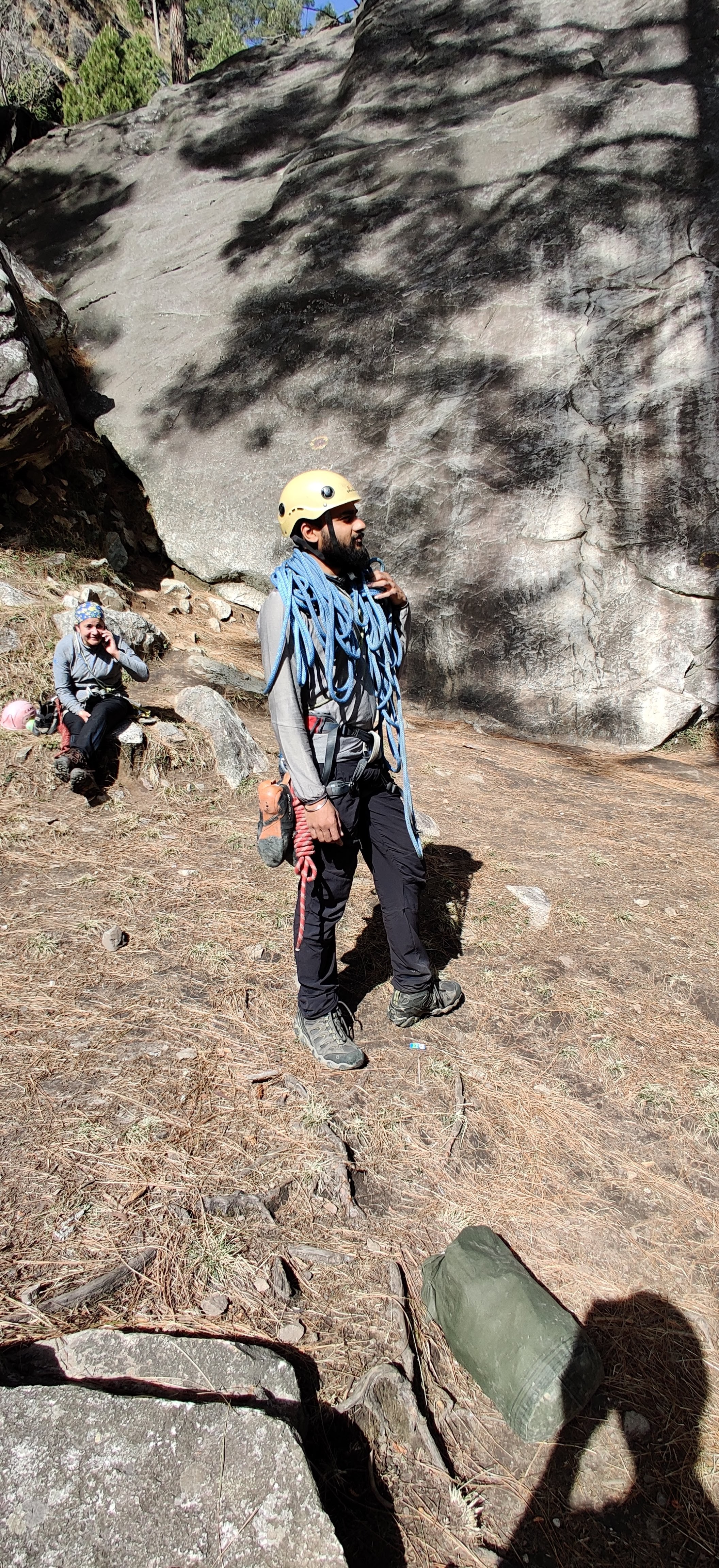
I've packed and unpacked this kit on over fifty Himalayan treks. Some items have been there from the beginning. Most have been upgraded or replaced as I learned what I was wrong about. Here's what's in the bag now — and why.
One caveat before the list: there's no universal kit. What you carry depends on the season, the altitude, the duration, and the group you're leading. What follows is my base kit for a Himalayan trek of 5–10 days above 3,500m. I scale up or down from here.
The Pack Itself
I use a 55L pack for most treks where there's porter or mule support for group gear, and a 70–75L when I'm carrying more of the shared load. The key things I look for: hip belt that actually transfers weight (not decorative), a back panel that breathes, and a lid pocket deep enough for a first aid kit and snacks.
I don't use a rain cover as my primary waterproofing — I use dry bags inside the pack. Rain covers work until they don't. A dry bag never fails.
Shelter and Sleep
- 3-season sleeping bag (rated -10°C comfort)
- Sleeping bag liner (silk — adds ~5°C, packs small)
- Lightweight inflatable mat (not foam — weight matters)
- Emergency bivy (never used it, always there)
- Headtorch with spare batteries
- Earplugs (shared tents are loud)
"Sleep is the most underrated performance variable on a long trek. A good sleeping system isn't a luxury — it's part of your safety kit."
Clothing System (Layering)
The layering principle is non-negotiable in the Himalayas. Temperatures swing 20°C between morning and afternoon. You need to be able to add and remove layers in motion.
- Merino wool base layer (top and bottom)
- Midlayer fleece (200-weight minimum)
- Insulated jacket (down or synthetic, 650+ fill)
- Hardshell rain jacket (not softshell — hardshell)
- Trekking trousers (2 pairs, one waterproof)
- Merino hiking socks (3 pairs minimum)
- Liner gloves + warm outer gloves
- Warm hat + sun hat
- Buff / neck gaiter
- Gaiters (for snow or monsoon)
Footwear
Leather or synthetic mid-cut boots with a stiff midsole — not trail runners. Trail runners work for experienced trekkers on dry trails. For everything else, and especially for group leaders who are on their feet 10+ hours a day on mixed terrain, you need ankle support and a robust sole.
I break boots in over 100km of walking before bringing them to altitude. I carry camp shoes (lightweight sandals) for evening use. Never walk barefoot at high altitude camp sites.
Navigation and Communication
- Offline maps downloaded (Maps.me + Gaia GPS)
- Physical topo map of the route
- Compass (always, even with GPS)
- Satellite communicator (Garmin inReach)
- Fully charged power bank (20,000 mAh)
- Emergency whistle
The satellite communicator is the one piece of kit I refuse to compromise on as a leader. Mobile coverage is unreliable above 3,500m in most Himalayan regions. If something goes wrong, you need a way to call for help. This is it.
First Aid (Leader-Level)
My first aid kit is significantly larger than what I recommend participants carry. As a Wilderness First Responder (NOLS certified), I carry medications and equipment that require training to use safely. The participant kit I recommend:
- Blister kit (moleskin, Leukotape)
- Paracetamol and ibuprofen
- Antihistamine
- Oral rehydration salts
- Diamox (with medical guidance)
- Antiseptic wipes and bandages
- SAM splint
- Pulse oximeter
The pulse oximeter is essential for anyone leading above 4,000m. SpO2 readings tell you things a person's face won't. I check readings at camp each evening and first thing each morning.
Food and Water
Hydration is the single biggest variable in altitude performance and AMS prevention. I carry two 1L bottles and a 2L reservoir — capacity for 4L. I drink approximately 4–5L per day above 4,000m. I push every member of every group to match this.
For food: high-calorie, easy-to-eat snacks distributed through the day. Nuts, dried fruit, energy bars, dark chocolate. Altitude suppresses appetite; you have to eat anyway. Appetite returning is a reliable sign of good acclimatisation.
What I've Dropped Over the Years
Trekking poles (I carry them now — resisted for years, wrong). A second camera (phone is sufficient). A full-size towel (microfibre or nothing). Anything cotton (cotton kills — wet, heavy, slow-drying, terrible insulator). Extra books (one, or Kindle). The extra pair of shoes I always brought "just in case".
The process of learning to pack well is the process of learning what you actually need versus what you think you need. Ten years of Himalayan trekking has made my bag lighter and more reliable simultaneously. That's the correct direction of travel.