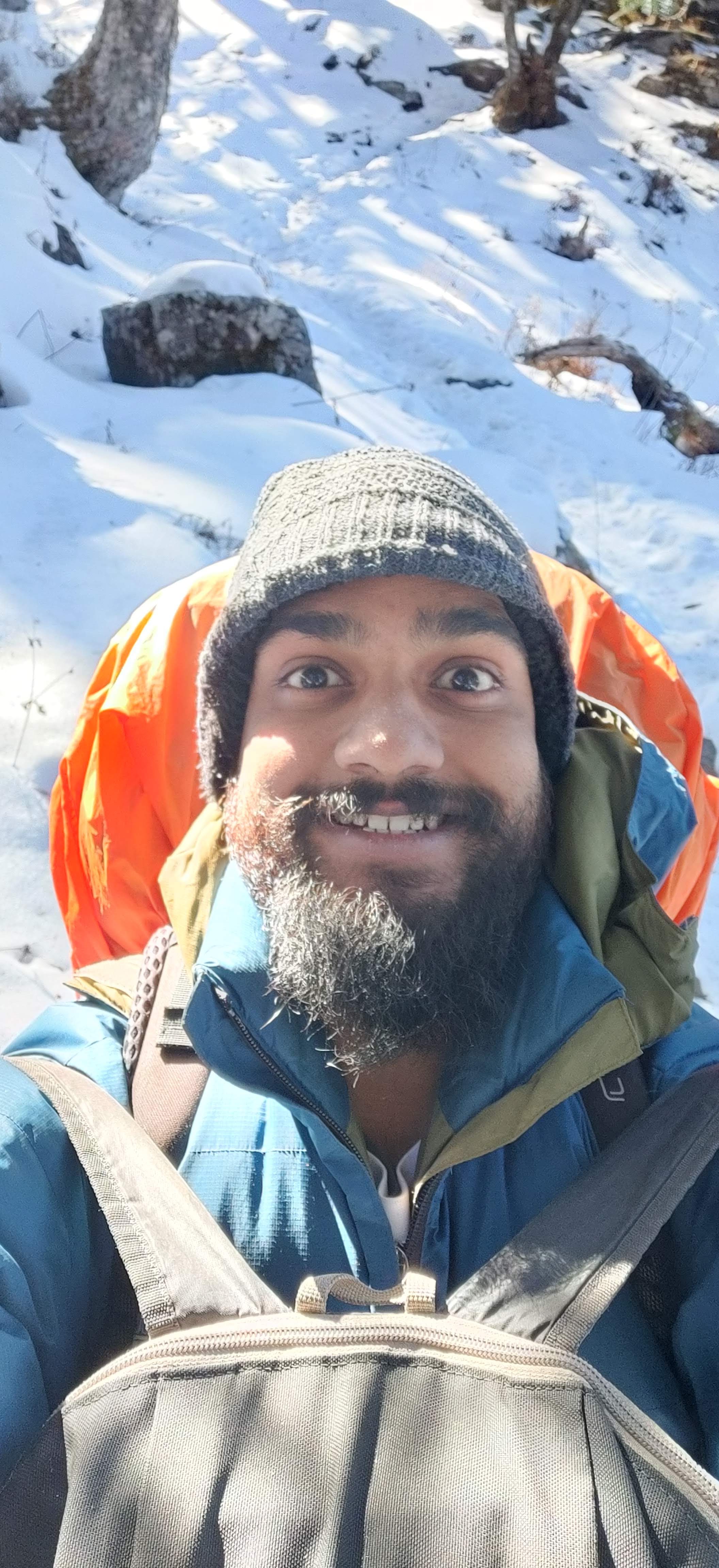
Rupin Pass has a reputation that precedes it. The snow wall. The altitude. The crossing that changes you. Some of it is earned. Some of it is marketing. Here's what it's actually like — particularly in winter, when the trail becomes a genuinely different animal.
The Route: What You're Actually Walking
Rupin Pass connects Dhaula in Uttarakhand (near Khara Patthar) to Sangla in the Baspa Valley, Himachal Pradesh — or vice versa. Most groups walk east-to-west, starting from the Uttarakhand side, because the ascent to the pass is more gradual in that direction and the descent into Sangla, while steep, is manageable with good conditions.
The terrain changes dramatically as you climb. The lower sections are forested, with waterfalls and the Rupin river as a constant companion. Above 3,500m the forest thins and the landscape opens into the wide alpine meadows that define the Himalayan high country. And then, at around 4,200m, the snow wall — Rupin's signature feature: a near-vertical face of compacted snow that you ascend using fixed ropes and your own determination.
Summer vs. Winter: Two Completely Different Treks
I want to be specific here because "Rupin Pass" online is usually being discussed in the summer context (June–September), and the winter experience (December–March) is significantly harder and deserves its own honest assessment.
In summer: The route is well-defined. The snow wall is technically straightforward if you're reasonably fit. The campsites are established. Villages along the way provide basic infrastructure. Dozens of groups are on the trail simultaneously, which creates both company and crowds. A fit recreational trekker who has done similar routes can complete this safely with a good operator.
In winter: The route changes character completely. The river crossings that are easy in summer become treacherous under ice. Sections of trail that are clearly defined in the warm season are buried under snowfields that need to be read carefully — the wrong line has consequences. The snow wall, already the technical crux, gains metres of additional depth and requires proper equipment and technique. Nights drop well below -15°C at camp. Emergency evacuation, if needed, becomes extremely difficult.
"Winter Rupin Pass is not Rupin Pass with snow added. It's a genuinely different undertaking. The people who struggle are those who prepare for the summer version and show up in February."
What the Snow Wall Actually Requires
The snow wall is the section that people think about and photograph. In winter, it demands: microspikes or crampons (full crampons preferred), ice axe (and the ability to use it), competence on fixed ropes, and the fitness to sustain effort at 4,400m while carrying a full pack.
I led this section with sixteen participants through OWLS (Outdoor Wilderness Learning School). Group management on a steep, icy snow face requires specific protocols: spacing, communication, self-arrest readiness, and a clear turnaround decision framework if conditions deteriorate. Two participants showed fatigue that concerned me at the base of the wall. We rested, ate, re-assessed. Both completed the crossing safely. The decision framework mattered as much as the technical skills.
Does Rupin Deserve Its Reputation?
For the summer route, the reputation is slightly inflated. It's a beautiful, challenging, memorable trek — absolutely worth doing. But it has become famous enough that it now attracts trekkers who are not quite ready for it, which creates a distorted assessment of its demands. It is not beginner terrain. It is not extreme terrain. It sits solidly in the "experienced and fit" category and rewards preparation.
For the winter route: the reputation, if anything, doesn't capture it fully enough. This is a serious undertaking that requires significant prior experience at altitude in winter conditions, proper gear, a qualified leader, and realistic expectations about risk. I would not recommend it to anyone who hasn't done at least three or four demanding high-altitude treks in varied conditions.
What Makes It Worth It
What Rupin Pass offers that few treks match is variety. The Rupin river for the lower sections. The forest, the waterfalls, the transition from deciduous to alpine landscape. The wide high-altitude meadows. The Sangla Valley descent, which is one of the most scenic sections of any Himalayan trek I know. And the snow wall — which, done safely, in good conditions, with a team that's ready for it, is one of those rare experiences that enters long-term memory immediately and stays there.
The winter crossing adds to this the particular quality of the Himalayas in deep winter: cold, clear, remote. The light on snow above 4,000m in January has a quality that's impossible to photograph adequately. The silence at high camp, broken only by wind, is complete. There are no other groups. The trail is yours.
That kind of wilderness experience is increasingly rare in the Himalayan trekking landscape. Rupin Pass in winter delivers it. Prepare accordingly.