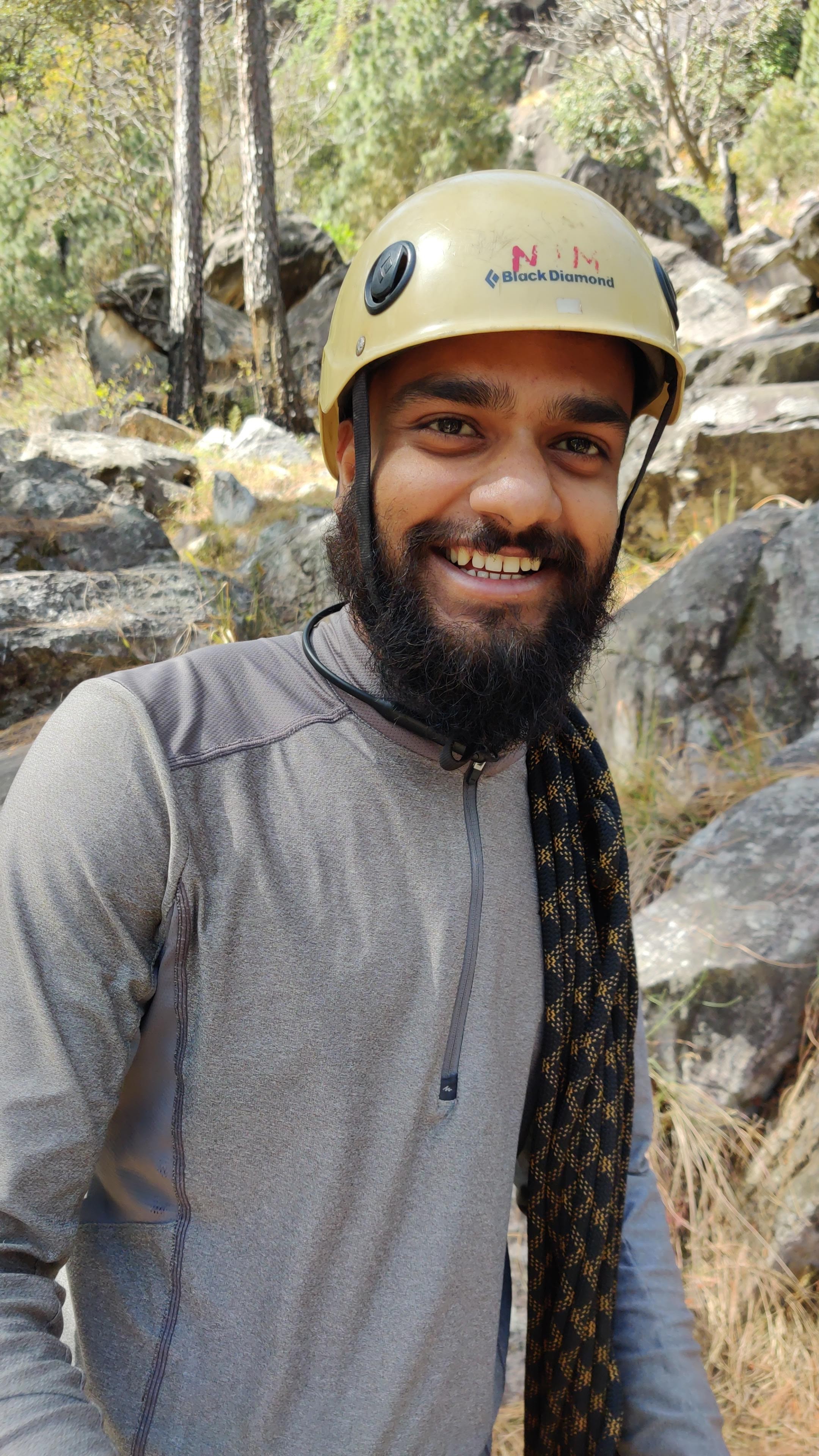
I've run 25+ school batches through Hampi. I know which boulder scramble makes thirteen-year-olds feel invincible. I know which history brief makes them actually stop walking and listen. I know what a bad edu-tour looks like — and I've worked hard to build the opposite.
Why Hampi
Hampi is one of the most extraordinary places in India. A UNESCO World Heritage Site that stretches across a landscape of enormous ancient boulders, ruins of the Vijayanagara Empire, temple complexes, and a river that runs through it all in a particular shade of green. For a school group, it has everything: history, geology, physical terrain, local culture, and enough visual strangeness to hold attention without effort.
The boulders are the thing. Hampi's landscape is defined by its granite outcrops — rounded, stacked, ancient — and they are genuinely climbable. Not technically, but physically enough that children feel the effort and the achievement. That matters enormously in an edu-tour context. If the learning only happens in temples and lecture format, you've designed a field trip. If children are also using their bodies, navigating terrain, managing discomfort — that's when the deeper learning starts.
What Most Edu-Tours Get Wrong
The most common failure mode I've seen in school trips to heritage sites is the itinerary-as-achievement model. You visit fourteen monuments in two days, children stand in front of each one while a guide recites facts, photographs are taken, and the bus moves to the next site. By the fourth stop, nobody is listening. By the sixth, the children are photographing each other and ignoring the guide entirely.
This isn't the children's fault. It's a design problem. Human attention — especially adolescent attention — is not designed to absorb passive historical information in sequence. It needs contrast, engagement, and moments of genuine discovery.
"The question isn't: how many sites can we cover? The question is: which two or three things do we want these children to actually remember in five years? Design backwards from that."
The Program I Run at Hampi
My Hampi programs are typically four days for school groups between ages 12–16. The design principles are fixed; the specific activities are adapted for each age group and school context.
Day 1 is arrival and orientation. No monuments. The first afternoon is a boulder walk — informal, exploratory, physically engaging. Children climb, scramble, get dusty, take photographs of things they find interesting rather than things they're told to photograph. In the evening, a campfire conversation: what did you notice today? What surprised you? The answers are always more interesting than you'd expect.
Day 2 is the historical deep-dive — but active. We walk the Hampi Bazaar and the Virupaksha Temple complex in small groups with a brief I've designed specifically for students (not the standard guide script). We stop at three points for structured inquiry: what do you think this was used for? Who do you think built it? What does this tell you about the people who lived here? I want children generating hypotheses, not receiving conclusions.
Day 3 is field challenge day. Groups get an orienteering-style challenge that requires them to navigate between landmarks, complete tasks at each one, and work as a team. This is the day that generates the most memorable moments — and the most conflict, which is educationally valuable. How a group manages a disagreement about which route to take tells you more about their social dynamics than any classroom observation.
Day 4 is reflection and departure. Morning: a solo sit for thirty minutes in a location each person chooses on the boulder landscape. No phones. Just time. Afternoon: group sharing of what the week was actually about. I've had children in this session say things about themselves that surprised their teachers — insights about their own capacity, their relationships with peers, what they value. That's the return on investment of the slow and intentional design.
The Role of the Facilitator
Most edu-tours are led by a teacher and a guide. The teacher manages logistics and behaviour; the guide delivers content. What's missing is the facilitation layer — someone whose job is to bridge the content and the children's experience of it. That's the role I play.
Facilitation at Hampi means noticing when a small group is really engaged with something and extending that moment rather than moving on. It means asking the question that takes a child's casual observation and turns it into genuine inquiry. It means structuring the day so that the physical and the cognitive are in dialogue — children who've just climbed a boulder are primed to think about what it took to build the temples in this landscape from those same boulders, without machinery, in the fifteenth century.
What Schools Should Ask Before Booking
If you're a school administrator planning an edu-tour to Hampi or anywhere else, the questions that matter most: What is the learning outcome of this trip? How will we know if it worked? What does the reflection structure look like? How much of the itinerary is active versus passive?
If the person you're talking to can't answer those questions clearly, you're booking a field trip, not an educational experience. The distinction matters — to the children, to the teachers who have to manage them, and to the learning that should outlast the Instagram posts.
Hampi is extraordinary. The children who experience it well — who climb its boulders, understand its history at a level beyond dates and names, and have the time to be surprised by it — carry something back that's genuinely worth carrying.